Albino Ball Python in India: Records to Check Before Taking One Home
An albino ball python's pale yellow and white colouring may be the first thing you notice, but a photograph is only the beginning of an ownership decision. Before arranging a handover, establish the animal's identity, the records that accompany it and the long-term care you can provide. If its origin or the applicable requirements are unclear, pause rather than treating a seller's reassurance as enough.
This guide is for a prospective keeper asking practical questions in India. It is not confirmation that a particular animal is lawfully sourced, available for sale or suitable for your home. It separates the species information on AapkaPet's catalogue from the official registration framework and the individual records you still need to check.
Quick answer: what should you check first?
Start with the exact animal, not only a morph name. Ask for its scientific name, available origin and acquisition records, applicable registration details and a veterinary history. Confirm the requirements for your circumstances with the relevant wildlife authority before paying or taking possession.
Ball python is the common name for Python regius. The French government's I-CITES taxon record lists the species in CITES Appendix II. That is a regulated-trade classification, not a blanket statement that any individual offered online can be bought, imported or transferred without further checks.
In India, the Ministry of Environment, Forest and Climate Change explains that possession of living specimens listed in Schedule IV is subject to reporting and registration. Its official explanation of the registration rules directs keepers to the PARIVESH system and the Chief Wild Life Warden of the relevant state. Do not confuse completing a purchase with completing the required process.
Understand what the catalogue description does and does not tell you
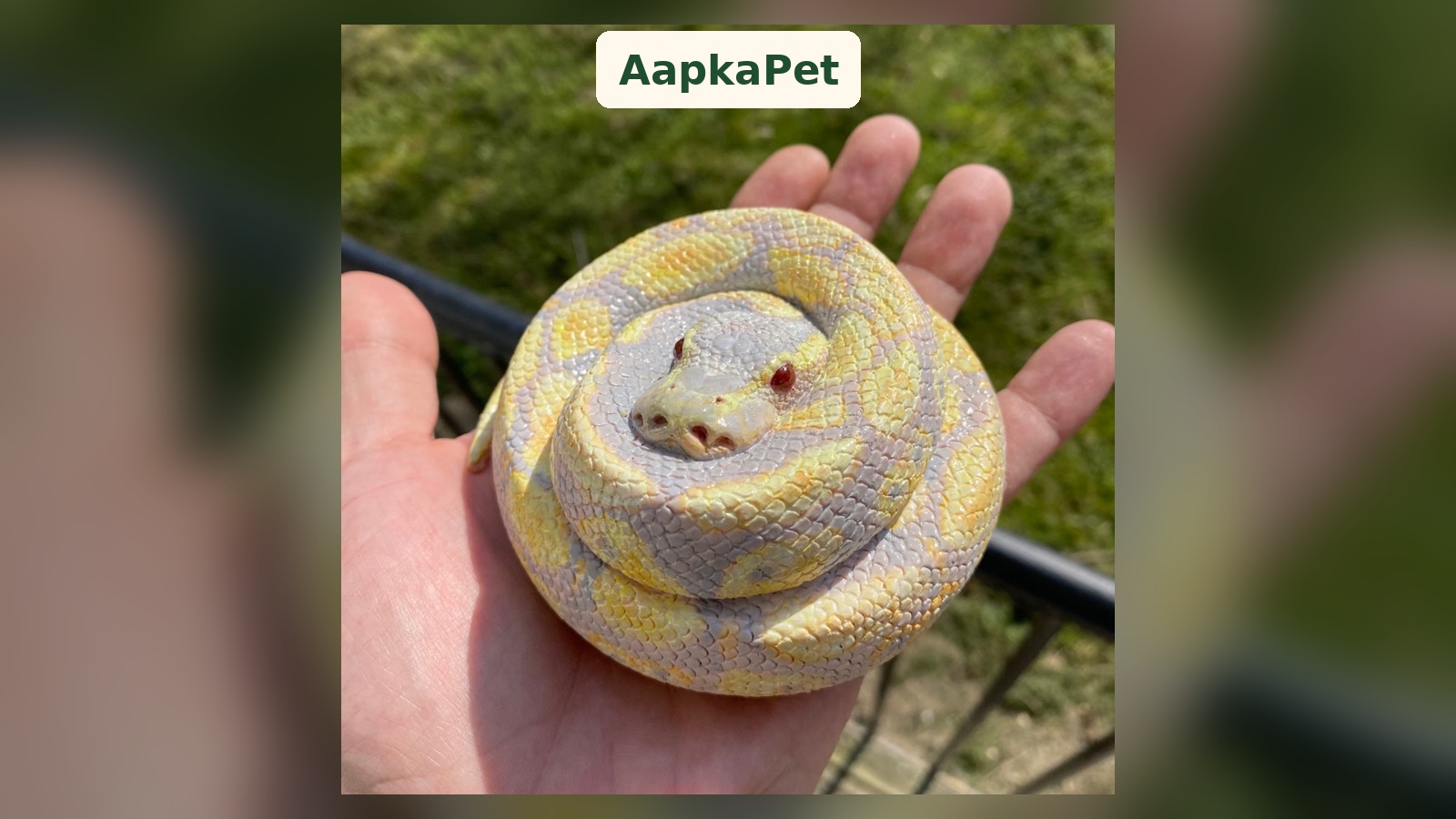
AapkaPet's Albino Ball Python page describes white and golden-yellow scales with red or pink eyes. It lists an average size of three to five feet and a lifespan of 20 to 30 years with proper care. These descriptions make the long-term commitment clearer, but they do not replace information about the individual animal under discussion.
Ask which animal the photographs show, whether its age and sex are known, and which details are documented rather than estimated. Keep the answers together so that a photograph, invoice, health record and any applicable registration information do not become disconnected.
The catalogue image accompanying this guide illustrates the listing. It is not proof of current stock, the condition of an animal today, its origin or its legal status. Confirm all of those separately.
Keep species identity separate from colour
A morph label describes an appearance. It should not be used in place of the species name on an enquiry or when discussing requirements with an authority. A listing that says only albino snake leaves too much uncertainty about what is actually being offered.
Ask the seller to identify the species clearly and explain how the animal is linked to its records. If a document uses a different name or a photograph cannot be connected to the animal, resolve that mismatch before going further. Do not rely on colour alone to settle a paperwork question.
This guide does not provide breeding advice or predictions about offspring. Claims about genetic lines, breeding value or future returns should not distract from the immediate responsibilities of lawful possession and suitable care.
Read the Indian registration rules in their proper context
The Living Animal Species (Reporting and Registration) Rules, 2024 define the covered animal species by reference to Schedule IV of the Wild Life (Protection) Act. The rules distinguish possession, birth, transfer, death and ongoing maintenance. Those are different responsibilities, not interchangeable forms of permission.
Rule 3 provides for electronic reporting and an application for registration of possession. Following the initial commencement window, it specifies a period of 30 days from possession for covered specimens. The original six-month commencement window mentioned in older notices was a 2024 transitional period, not a fresh six-month allowance for a new acquisition today.
The rule also addresses supporting documents according to the acquisition circumstances. For acquisition through import after the relevant amendment commenced, it refers to a copy of the import licence and CITES export permit or certificate; it also refers to a registration certificate where applicable. A domestic transfer should not be described as a new import simply because the species is exotic.
Ask the relevant authority which records and process apply to the actual animal and transaction. Registration is not a substitute for establishing lawful origin, and this article is not an assurance that any particular set of papers is sufficient.
Ask how the animal's history is documented
Before a handover, request a clear account of how the animal came into the present keeper's possession and what evidence supports that account. Ask which documents are originals, which are copies and how the records identify the specimen being discussed.
Useful questions include whether the animal was acquired domestically or through import, what registration details apply, and how the proposed transfer will be reported. Where a record does not answer a question, keep it marked as unresolved rather than accepting a verbal promise to supply everything later.
Do not assume that an invoice alone replaces wildlife documentation. Equally, a document bearing a familiar species name does not by itself establish that it belongs to the animal you have seen. Seek clarification from the issuing authority or a qualified adviser when the connection is unclear. Avoid sending unnecessary identity documents to an unverified seller during an initial enquiry.
A transfer has its own reporting step
Rule 5 says that a person issued a registration certificate who transfers a covered animal must report that transfer to the Management Authority or authorised officer in Form I within 15 days. It also applies the possession-registration provisions, as far as may be, to the application and certificate process under that rule.
For a prospective keeper, the practical point is to discuss both sides of the handover. Ask what the current registered keeper must report, what you must submit and how the animal and records remain connected throughout. Obtain the authority's guidance before the transfer if anything is unclear.
This is not a reason to rush because a seller says a deadline will be missed. It is a reason to understand the process in advance. A proposed handover should not go ahead on an assumption that someone else will handle every requirement afterward.
Veterinary records are an ongoing responsibility
The 2024 rules do not stop at the initial application. Rule 7 requires a registered keeper to arrange a health check at least once every six months by a veterinary practitioner and maintain the animal's health record in Form IV. The rules define that practitioner by reference to registration with the Veterinary Council of India.
Ask when the most recent examination took place and what records are available. A general phrase such as vet-checked is less informative than a dated record linked to the animal. It is also not a guarantee that an animal will never become unwell.
Identify a veterinary practitioner able to advise on reptile care before taking an animal home. Discuss the individual animal's needs and any concerns directly. This guide does not diagnose illness, prescribe treatment or replace that professional assessment.
Plan the home before discussing a collection date
AapkaPet's catalogue describes a warm terrarium, appropriate humidity, hiding spaces and a rodent-based diet. Treat those as topics to discuss in a complete care plan, not as a shopping list that can be improvised after arrival.
Before committing, establish where the enclosure will stand, how it will be secured and how environmental conditions will be monitored. Discuss equipment, feeding arrangements, cleaning and individual care requirements with a competent reptile professional and veterinary practitioner. If you cannot arrange suitable care consistently, delay the decision.
The catalogue's stated lifespan is measured in decades. Think beyond the first enclosure: household agreement, changes of address, regular expenses, veterinary access and care during your absence all matter. Do not choose an animal only because its current size or appearance is appealing.
Security and records continue after the handover
Rule 7 requires registered keepers to prevent escape and to present the animal and relevant records for inspection when required. It also requires an escape to be reported to the nearest forest office immediately and no later than 24 hours afterward. Prevention and a clear plan are better than trying to work out whom to contact during an incident.
Keep the applicable authority's contact information with the animal's records. Store veterinary documents and registration information in an organised way, and note the next steps that apply to your circumstances. Do not allow paperwork to become separated from the animal during a move or later change of keeper.
These are responsibilities of keeping a regulated living animal. They should be part of the decision before possession, not treated as optional extras after an online enquiry.
Keep the enquiry factual and unhurried
If you contact AapkaPet about its catalogue entry, ask about the individual animal, its current availability, records and the information needed for a responsible decision. The listing does not establish a current price or a reservation, and this guide makes no availability or lawful-stock promise on the seller's behalf.
Use the enquiry to resolve questions, not to bypass checks. If the animal's identity, origin, health history or applicable process remains uncertain, do not pay or arrange a handover until those points are settled. An attractive photograph or a quick response does not remove the need for evidence.
Frequently asked questions
Is an albino ball python the same as any pale-coloured snake?
No identification should be made from colour alone. Ask for the scientific name and records identifying the animal. Ball python is the common name for Python regius; a morph name is not a substitute for species identity.
Does a CITES Appendix II listing mean no paperwork is needed?
No. It is a regulated-trade classification. Import, possession and transfer requirements must be checked for the actual circumstances. It does not validate an individual seller or animal.
Is the old six-month registration window still a new keeper's deadline?
The six-month period in the 2024 commencement notices was transitional. Rule 3 sets out the later 30-day possession provision for covered specimens. Confirm the applicable process with the relevant authority before taking possession.
Does a health check at sale end the keeper's veterinary duties?
No. Rule 7 requires a registered keeper to arrange a health check at least once every six months and maintain the health record in Form IV. Ask a suitable veterinary practitioner about the individual animal's care.
Can this article confirm that a particular snake is legal to buy?
No. That requires checking the animal, its origin, supporting records and the requirements applying to the transaction. Seek guidance from the relevant wildlife authority when anything is unclear.
What should I do if the seller promises to provide documents later?
Keep the issue unresolved and pause the transaction. Establish which records apply and obtain the necessary clarification before paying or taking possession, rather than relying on a later promise.